Ever tried to fit a square peg into a round hole? That’s what using standard concrete delivery methods on a constrained site can feel like. You’ve got a fantastic project—a backyard pool, a basement foundation in a city row house, a garden studio at the end of a narrow path—but the logistics of getting wet concrete into that precise spot seem almost impossible. This is where the unsung hero of specialized construction equipment enters the scene: the crawler type 15m mini concrete pump truck. It might not look as imposing as its towering city-pouring cousins, but for navigating the complex puzzle of tight spaces, its unique blend of compact mobility and precise placement is absolutely unmatched. Let’s break down why this machine is becoming the secret weapon for savvy contractors and homeowners tackling tricky pours.
The Anatomy of Access: Why Crawlers and Compact Size Win
To understand why this machine works, we need to look at what makes standard concrete delivery fail in confined areas. A traditional truck-mounted concrete pump needs two big things: stable, hard ground for its outriggers and a clear path for the truck itself. In a tight space, you often have neither. Enter the crawler pump. Its design elegantly sidesteps both of these constraints.
Conquering Unstable Ground with Tracked Mobility
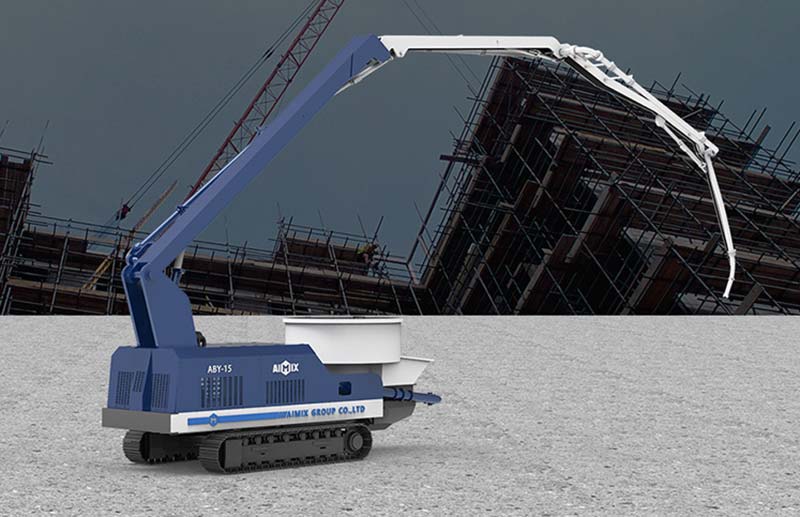
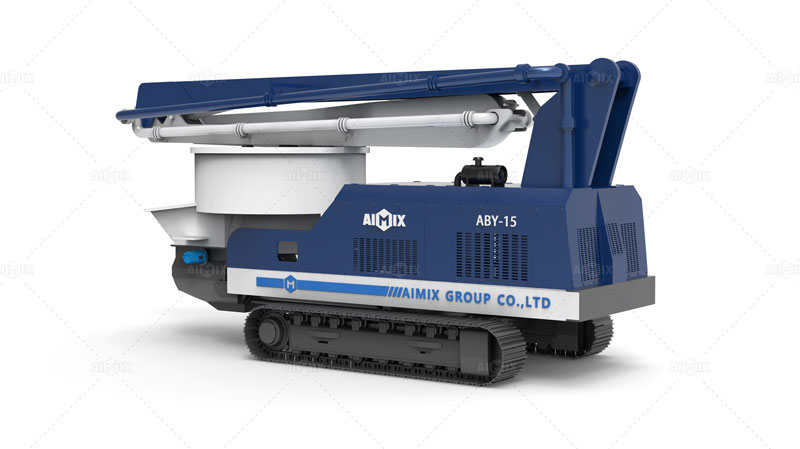
The “crawler” in its name is the first superpower. Instead of wheels or static outriggers that need perfect concrete to stand on, it uses steel tracks. Think of it like a mini-tank for concrete. These tracks distribute the machine’s weight over a much larger surface area, giving it an incredibly low ground pressure. This means it can drive right across soft soil, freshly backfilled trenches, or muddy yards that would sink a truck or require expensive temporary road plates. It doesn’t just tolerate bad ground; it’s built for it. Once in position, it can use its outriggers (which are much smaller than a truck’s) for final stabilization, but the tracks have already done the heavy lifting of getting it there safely.
The 15m Boom: A Study in Precision Over Reach
The “15m” boom (about 49 feet) is the second part of the equation. In the world of concrete pumps, this is considered a compact or mini boom. But here’s the thing: in a tight space, excessive reach is not your friend. A longer boom is heavier, requires more swing room, and is harder to maneuver with precision in a cluttered environment. The 15m boom is a study in agile dexterity. It’s typically a 3 or 4-section articulating boom that can snake over fences, between trees, or through a narrow alleyway with incredible control. The operator can place concrete with pinpoint accuracy, bucket-by-bucket, directly into the forms without wasting a drop or risking spillage in areas you can’t easily clean.
The Project Sweet Spot: Where This Machine Truly Shines
So, where do you actually use this? Its niche isn’t massive commercial slabs, but rather the high-logistics, small-to-medium volume pours that make up so much of residential and light commercial work.
Residential and Urban Infill Champions
This machine is the undisputed champion for residential projects with access issues. Building a new garage behind an existing house? The boom concrete pump for sale can track through the side yard. Pouring a pool in a fenced backyard with a gate too small for a truck? No problem. It’s perfect for basement renovations in established neighborhoods, footing pours for additions, and patios where you want to preserve the existing landscaping. In dense urban areas, it can park on the street and reach over a building to pour a rear courtyard or roof deck, eliminating the need for a massive crane and bucket—a process that is slower, messier, and far more expensive.
Specialized and Hard-to-Reach Applications
Beyond the standard house project, its utility extends to a range of specialized scenarios. Think about landscaping features like large retaining walls on a slope, where a truck could never safely park. It’s ideal for repairing bridge abutments or culverts where access from below is the only option. Agricultural settings, like pouring foundations for grain silos or barn repairs in the middle of a field, are another perfect fit. For any job where the phrase “we can’t get a truck back there” is uttered, the crawler small concrete pump for sale is the immediate retort.
Beyond Access: The Practical and Economic Advantages
Solving the access puzzle is the headline, but the benefits of choosing this solution ripple out into practical, on-the-ground savings and efficiencies.
Reducing Labor, Preserving Site Integrity, and Increasing Speed
Let’s talk labor. The alternative to a pump is often manual labor with wheelbarrows or a crane and bucket. Both are incredibly labor-intensive, slow, and increase the risk of concrete segregation (where the aggregate and cement paste start to separate). The mini pump delivers a continuous, consistent stream right to the point of placement with a crew of just two or three people. It also preserves your site. You avoid the ruts and compaction from heavy trucks, and you don’t have to tear down fences or gates for access. The pour itself is faster and more controlled, which is critical for concrete quality, especially in hot weather where workability time is limited.
The Cost-Benefit Analysis: More Value Than You Might Think
At first glance, hiring a specialized pump might seem like an added expense. But you need to run a total cost analysis. Add up the extra labor hours for a manual pour, the potential cost of site damage repair, the rental of a crane, and the risk of a poor-quality pour due to delays and handling. Suddenly, the efficiency of the mini boom concrete mix pump presents a compelling value proposition. It turns a logistical nightmare into a smooth, one-day operation. For contractors, it allows them to bid on and confidently execute jobs they might have previously turned down due to access concerns. It’s not just a tool for placing concrete; it’s a tool for unlocking new business opportunities and completing projects with a level of professionalism and precision that wheelbarrows simply can’t match. In the world of tight spaces, it’s not just a solution—it’s often the only logical one.